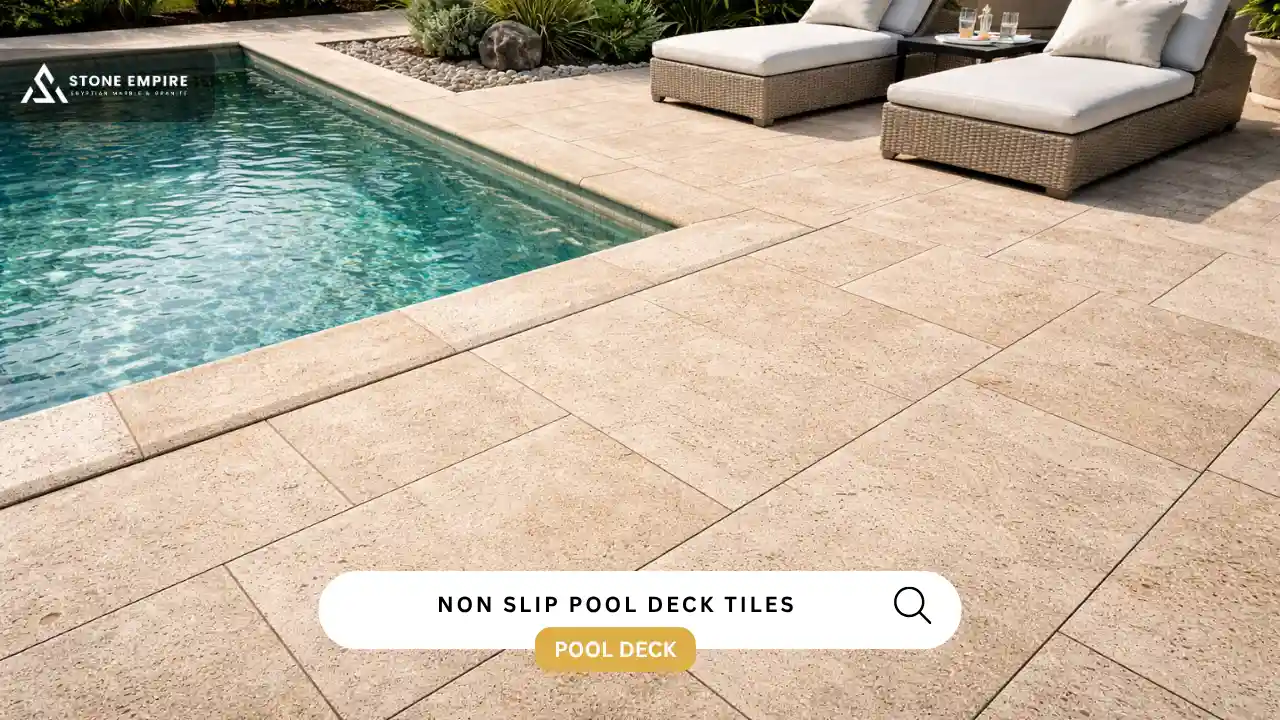
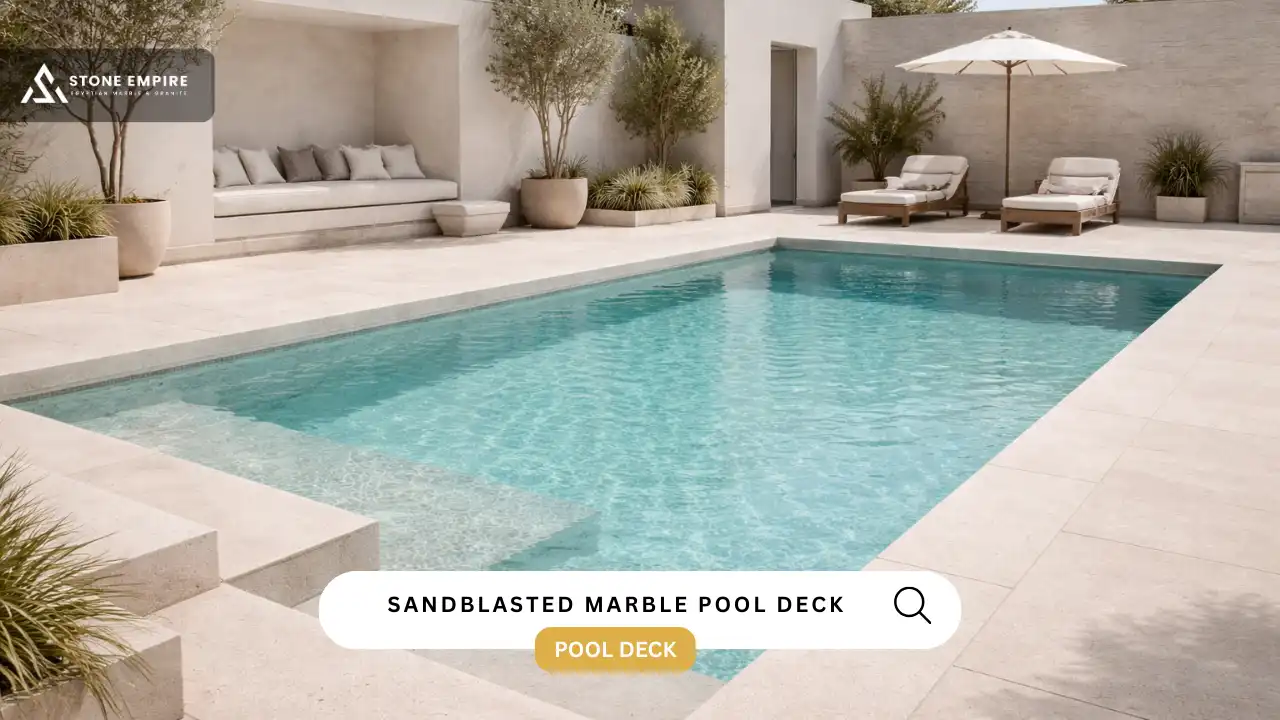
Planning a sandblasted marble pool deck? The finish can mean the difference between a luxury look and a slippery pool surround. Sandblasting gives Egyptian natural stone a matte, grippy texture ideal for sandblasted marble pavers, steps, and sandblasted marble pool coping. This guide compares sandblasted marble vs travertine pool deck performance, cost, and maintenance, then shows how to specify the right stone details with specs in mind.
What Is a Sandblasted Marble Pool Deck?
A sandblasted marble pool deck is a pool surround built with Egyptian natural stone that’s treated with a sandblasted finish to create a matte, lightly textured surface.
Stone Empire describes sandblasting as a finish chosen when you want a natural look that feels less reflective than glossy stone, with added surface texture for daily use, especially outdoors and in high-traffic areas.
For pool projects, the system typically includes:
- The main deck area in sandblasted finish pavers (tiles) is designed for wet zones and frequent foot traffic.
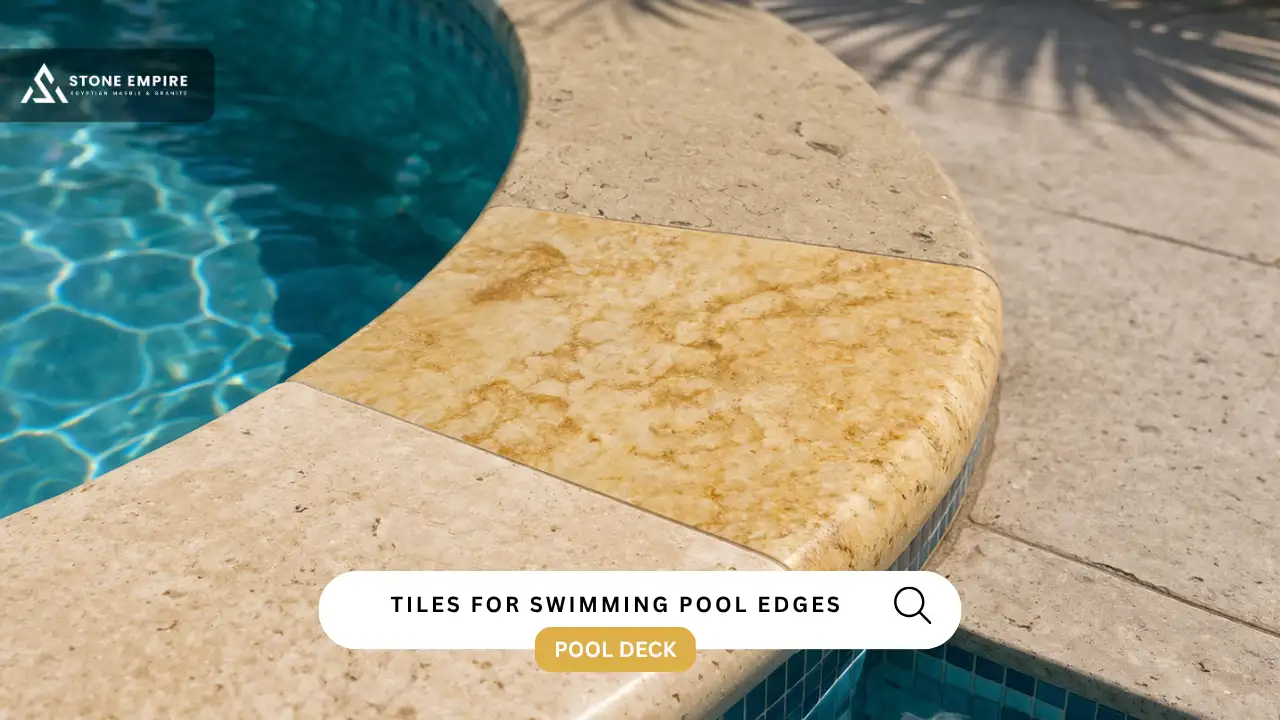
- Fabricated perimeter pieces like sandblasted marble pool coping and step units made as custom cuts for precise fit and clean lines.
- Safe, comfortable edging bullnose is a common edge profile around the pool line because it’s smoother underfoot and comfortable for swimmers’ hands.
Benefits of Choosing a Sandblasted Marble Pool Deck
A Sandblasted marble pool deck offers several advantages that make it ideal for pool environments.
- Improved Slip Resistance
- Marble tends to stay cooler than many other materials
- Sandblasting keeps the natural color and character of marble
- High-quality marble can withstand sun exposure, water, and heavy foot traffic
- Works with many architectural styles, from luxury resorts to modern backyard pools.
Because of these benefits, sandblasted marble is commonly used for pool decks, coping, outdoor patios, and walkways.
Sandblasted Marble Pool Deck vs Travertine Pool Deck

When people compare sandblasted marble vs travertine pool decks, they usually focus only on the stone type. However, the real difference is how the surface performs around water, including texture, comfort for bare feet, and long-term durability.
1. Appearance and Texture
Sandblasted Egyptian marble: clean, matte, and evenly textured, ideal when you want a refined natural-stone look with added grip. This is where Stone Empire options like Sunny, Galala Extra, and Silvia work well for classic beige pool designs, while Sinai Pearl Triesta adds a more distinctive fossil-character look.
Travertine: naturally more rustic because of its pores/voids and higher visual variation. Some clients love the character; others prefer the cleaner, more uniform appearance of sandblasted marble.
2. Heat Resistance and Comfort Underfoot
Pool decks are usually walked on barefoot, so comfort matters.
Sandblasted Egyptian marble: The matte texture helps reduce glare and improves grip near wet areas. Light-colored marble is often chosen because it keeps the pool area bright and comfortable in sunny climates.
Travertine: Travertine can also feel comfortable underfoot, but its natural holes and uneven texture can make the surface less consistent across the deck.
If the choice is more about texture options than stone type, see Leathered Marble Pool Decks as another finish alternative.
3. Durability and Weather Performance
Durability is important for any pool deck.
Sandblasted Egyptian marble: It is strong, durable, and reliable for areas exposed to water, sunlight, and heavy foot traffic. It works well for pool decks, coping, and steps.
Travertine: Because it is more porous, travertine may need more sealing and maintenance over time, especially in areas exposed to moisture and pool chemicals.
Sandblasted Marble vs Travertine Pool Deck Cost Comparison
A real cost comparison isn’t “marble vs travertine,” it’s scope vs scope. To compare fairly, both quotes must match the same specifications:
- Deck area (m²) and layout pattern
- Stone Thickness
- Coping length (m) + edge profile (e.g., bullnose or straight)
- Step or threshold pieces, if required
- Drainage preparation and slope requirements
- Sealing plan and expected cleaning routine
- Delivery destination (local vs export)
Without matching these specifications, comparing prices between marble and travertine can lead to misleading conclusions.
What Actually Drives the Final Pool Deck Cost
At Stone Empire Egypt, sandblasted marble pool deck projects are priced based on several practical factors that directly influence the final cost.
These include:
- Stone type
- Format (tiles/custom cuts)
- Thickness and total quantity required
- Edge profiles and fabrication details for coping and steps
- Packaging and shipping destination
Each of these elements can significantly affect the total project price.
Read Also : Marble vs Travertine Pool Deck
Maintenance Requirements for Sandblasted Marble Pool Decks
Sandblasted marble is made for real outdoor use, but like any Egyptian natural stone, it performs best with the right care, especially around chlorine or salt systems, where splash-out and chemical residue can build up over time.
Routine cleaning (simple, effective)
- Sweep or rinse regularly to remove sand and dust before it grinds into the surface under foot traffic.
- Clean with a soft brush/cloth + a pH-neutral stone cleaner for normal washing.
- Avoid harsh, acidic, or abrasive products.
Top 5 Sandblasted Marble Options for Pool Deck
There’s no single marble that works perfectly for every pool. The best choice depends on how busy your pool deck is, how wet the area gets, and the overall style you want to achieve.

Here are the top Egyptian marble options that work with a sandblasted finish:
1. Sinai Pearl Marble (Best for Maximum Grip)
If safety and traction are your top priorities, Sinai Pearl Marble is one of the best choices. This stone provides tested slip-resistance performance and has very low porosity, which helps reduce water absorption.
Because of these properties, Sinai Pearl Marble works especially well in splash zones, pool entries, and steps, where surfaces are frequently wet and safety is essential.
2. Sunny Menia Marble (Best for the Classic Pool Look)
If you're aiming for the classic Egyptian beige pool deck style, Sunny Menia Marble is a timeless option. It’s the timeless, bright-beige direction many people want around pools, and it has strong published durability numbers, so you’re not choosing based on looks only.
3. Silvia Marble (Best for High-Traffic Pool Decks)
For pool decks that experience heavy use, such as family homes, rental properties, hotels, or resorts, Silvia Marble is a smart option, because of its durability and strength.
4. Galala Extra Marble (Best for Long-Term Durability)
If your project requires extra durability or you simply want added peace of mind, Galala Extra Marble is a reliable choice.
This marble features low water absorption and strong resistance to environmental stress, which helps it perform well in outdoor conditions.
5. Grey Teriesta Marble (Best for Modern Pool Designs)
For homeowners or designers looking for a modern and contemporary pool design, Grey Teriesta Marble is an excellent option.
If you want more choices, contact us
Conclusion
A sandblasted marble pool deck gives you a premium Egyptian marble look with a matte, grippy surface that suits wet pool zones. The best result comes from selecting the right marble and specifying the details that matter, consistent sandblasted texture across the deck and coping, clean fabrication on steps/edges, and spec-backed indicators like SRV, water absorption, and compressive strength.