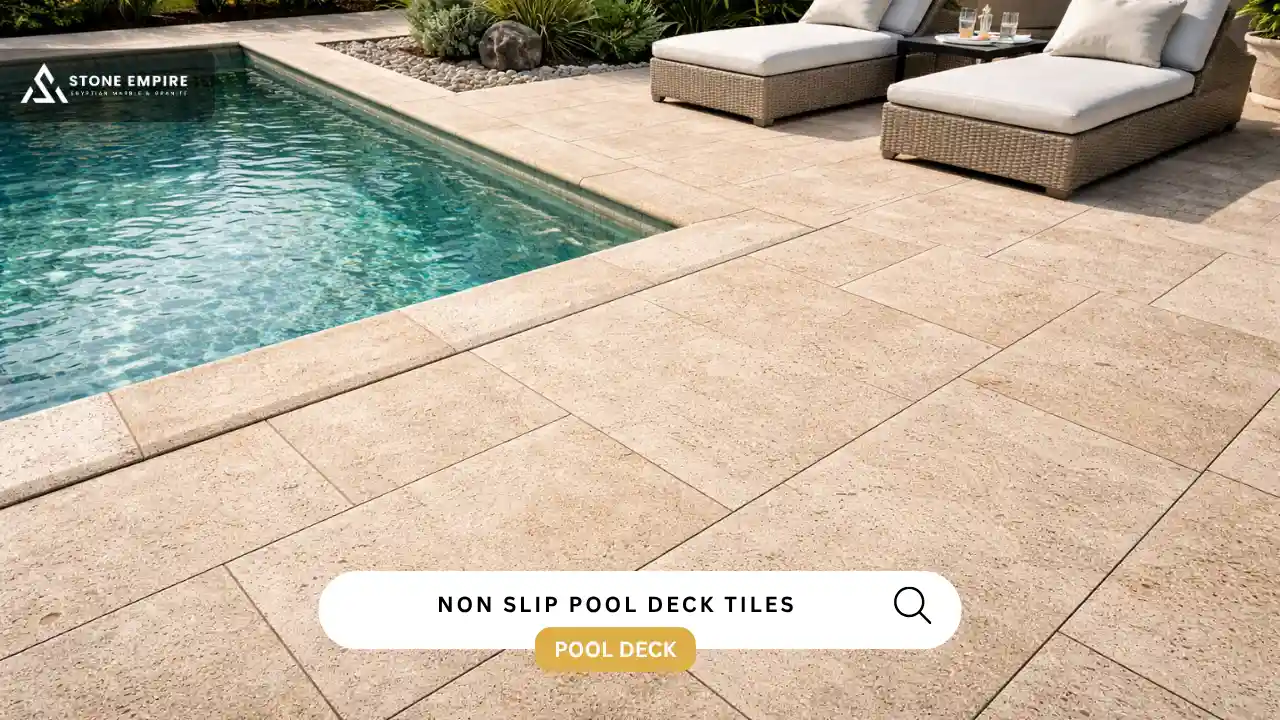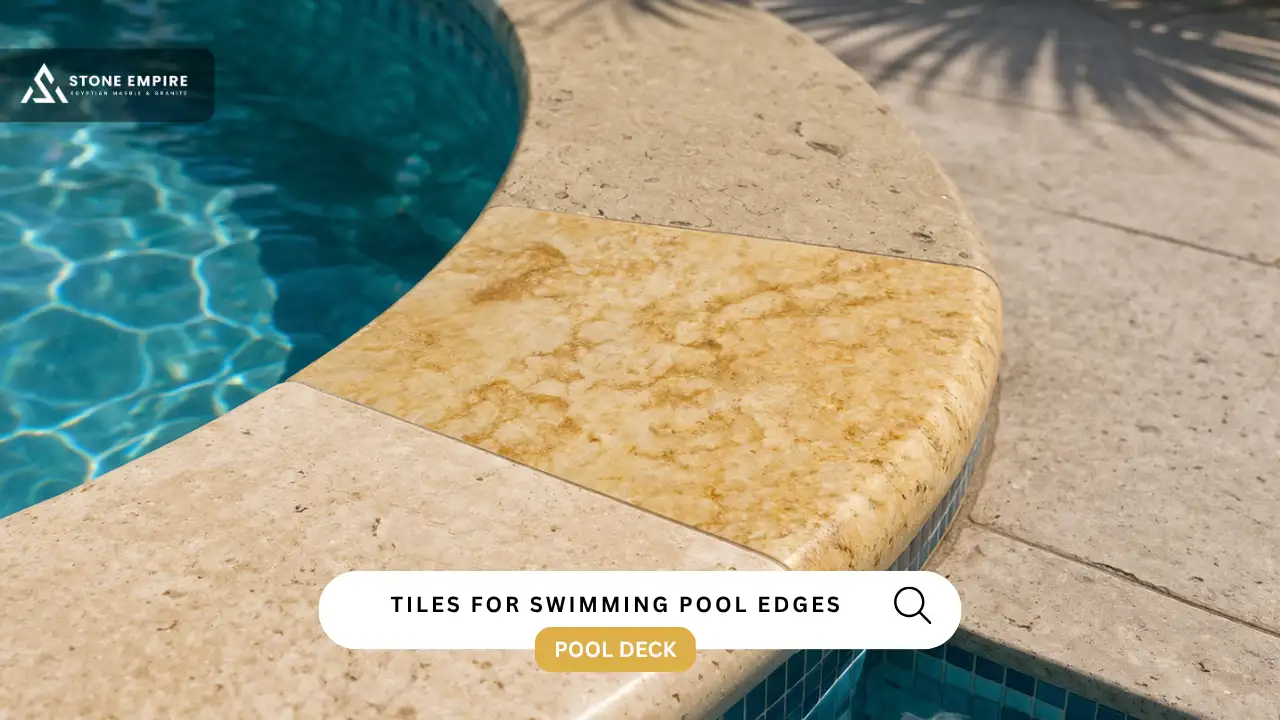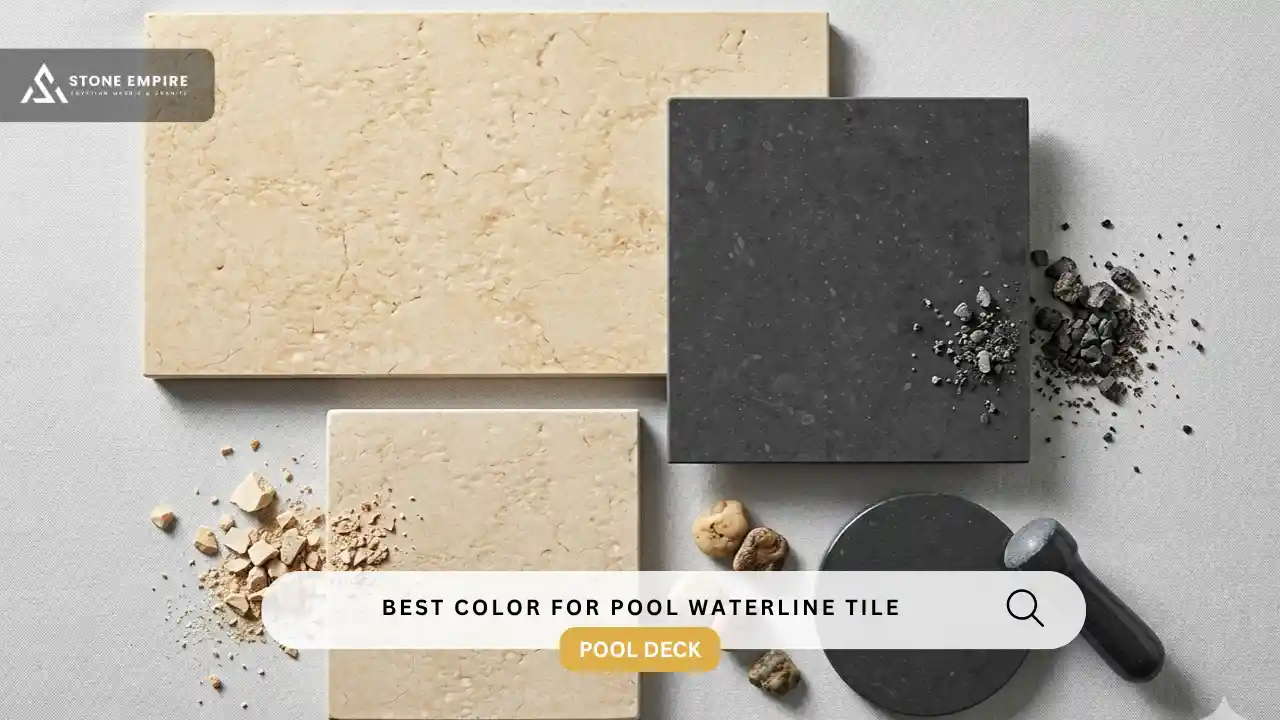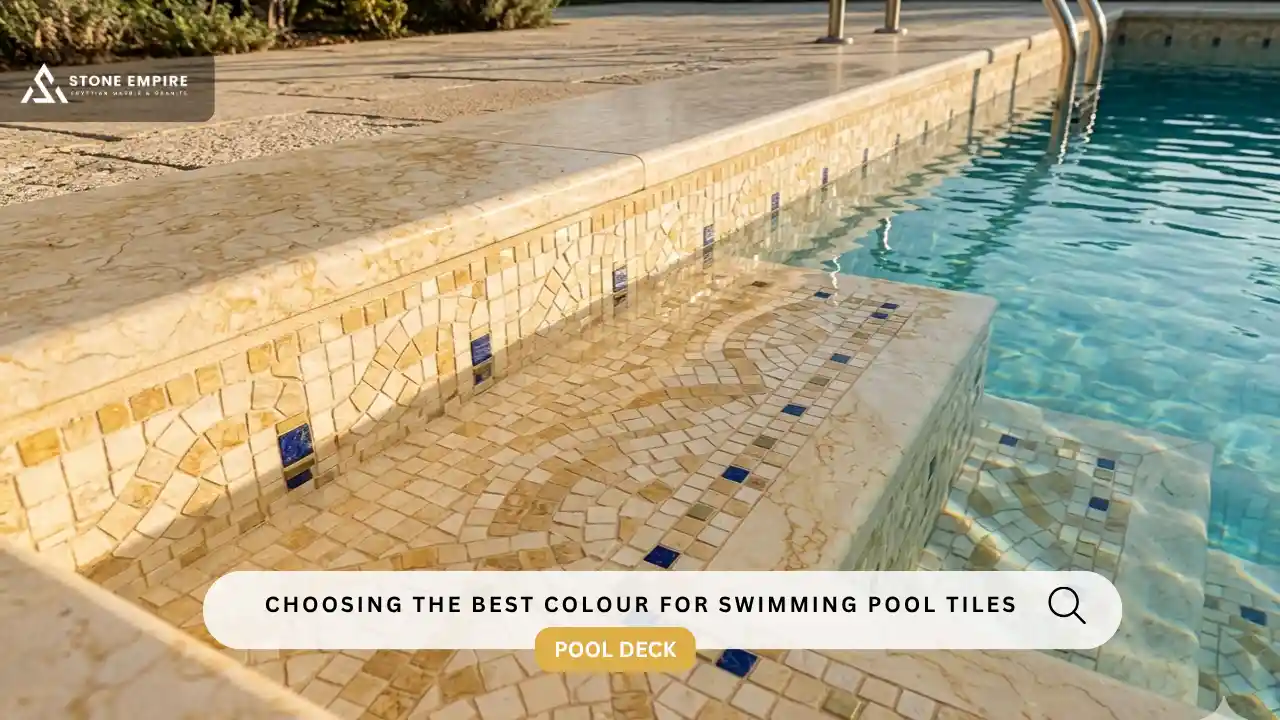
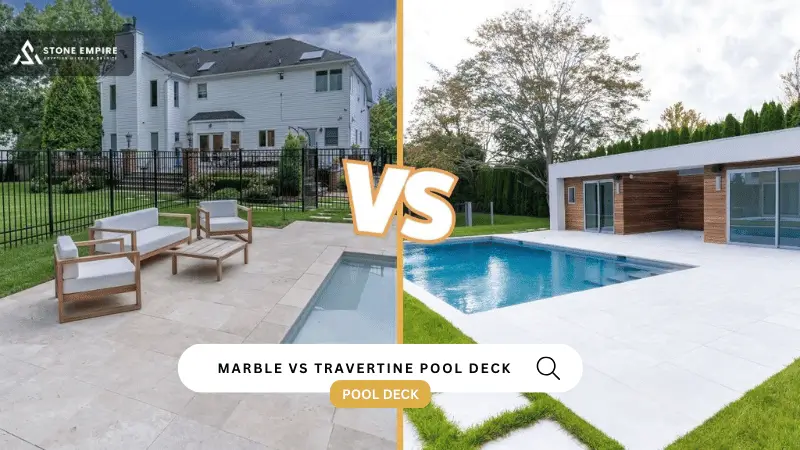
Your pool deck isn’t just decoration; it’s the surface everyone walks on with wet feet, and every step tests its grip, durability, and resistance to stains. So, if you choose the wrong stone or finish, it can become slippery, hard to clean, or start looking worn out faster than expected. In this complete marble vs travertine pool deck guide, we break down what truly matters: slip resistance, barefoot comfort in hot weather, durability in splash zones, maintenance effort, and real project cost.
Marble vs Travertine Pool Deck
Both marble and travertine can work around pools, but performance depends more on finish, drainage, sealing, and cleaning habits than just the stone name.
If your pool uses a salt system, choosing the right finish becomes even more important. Salt exposure can increase surface wear by 15–25% faster if the stone is not properly sealed and maintained.
Below is a clearer side-by-side comparison.
1. Marble vs travertine pool deck pros and cons
Both stones can look premium, but around a pool, the difference shows up in the details: wet grip, how the surface feels barefoot, and how easily it stays clean in the splash zone.
Pros of a marble pool deck
- High-end, elegant look that suits modern or classic designs
- Works beautifully for coping and surrounds when paired with the correct natural stone finishes for safety and durability
- Can deliver a cleaner, more “uniform” appearance in large formats
Cons of a marble pool deck
- Polished surfaces are risky near water; choose honed, brushed, sandblasted, or tumbled for better grip
- Marble can etch (dull marks) if acidic or harsh cleaners are used
- Needs a consistent sealing + gentle cleaning routine to keep its original look
Pros of a Travertine pool deck
- Naturally textured options (especially tumbled) can feel more secure underfoot when wet
- Warm, natural look that hides small marks better than very smooth stones
- Often chosen for pool surrounds because it balances texture and comfort
Cons of a Travertine pool deck
- What is the disadvantage of travertine? It’s typically more porous and may have natural holes/voids, so it needs sealing and can hold dirt if neglected
- Like marble, travertine can also etch if acidic cleaners are used
- Poor drainage or weak jointing can lead to staining and faster wear around the splash zone
2. Heat Resistance and Comfort Underfoot
Light-colored natural stone can reflect 30–50% of solar heat, helping keep surfaces cooler.
Studies and field measurements show:
Light marble and light travertine can stay 5–10°C cooler than darker stones.
Textured finishes dry 20–30% faster than polished ones because they shed water better.
With a sandblasted or Bush-hammered finish, marble offers a cooler, more even surface that sheds water efficiently and feels pleasant to walk on, even in high-use areas.
Recommended Marble Finishes:
With the right finish, marble becomes a practical and elegant choice for pool surroundings.
3. Durability & Long-Term Performance
When properly installed:
Marble (textured finish):
- Can maintain appearance for 20+ years
- Requires sealing every 12–24 months
- Lower risk of deep staining compared to more porous stones
Travertine:
- May require sealing every 6–12 months
- Higher chance of joint darkening if water accumulates
- Natural voids may need filling over time
4. Porosity & Water Absorption
Marble is usually better around pools.
Here’s the simple reason:
- Marble absorbs less water (about 0.2%-0.8%)
- Travertine absorbs more water (about 0.5%-2%)
From a porosity standpoint, dense marble offers up to 2-3× lower water absorption than standard travertine, making it a more stable choice in high-moisture pool environments.
So if your goal is lower maintenance and cleaner-looking joints long term, marble is typically the safer choice.
5. Maintenance Requirements: Marble vs Travertine
Both stones remain in good condition with proper sealing and gentle cleaning, but their maintenance isn’t equal.
Marble maintenance:
- Marble needs pH-neutral cleaners and a textured finish. When specified correctly, it’s easier to keep clean, and joints stay brighter because the stone absorbs less water.
Travertine maintenance:
- Travertine requires more frequent sealing and careful cleaning. Its open texture can trap dirt and moisture if neglected, especially in joints and splash zones.
Read Also: best pool finish for salt water pool
Marble vs Travertine Pool Deck Cost Comparison
Marble vs travertine pool deck price varies based on quality, thickness, finish, and supplier.
- Marble is generally more expensive, especially premium white varieties.
- Travertine is often more cost-effective while offering excellent performance.
Installation costs are similar, but long-term maintenance may make marble more expensive over time.
Which Is Safer for Pool Areas?
The safer pool deck isn’t “travertine” or “marble” by name; it’s the one that keeps a good grip when wet and stays easy to clean in the splash zone.
Simple Safety Rules:
Don’t use polished stone where people walk with wet feet.
- Choose a textured finish like brushed, sandblasted, or bush-hammered.
- Avoid glossy film sealers near the pool edge (they can reduce traction).
- Make sure water drains properly with the right slope and clean joints.
- Clean regularly to prevent algae and dirt buildup.
With the correct finish and maintenance, both marble and travertine can be safe and practical choices for pool areas.
Read Also : Leathered Marble Pool Decks
Best Pool Deck Option for Different Climates

Instead of thinking “climate,” think about how your pool area actually behaves day to day, sun, shade, salt exposure, and how often the surface stays wet. Different weather patterns affect surface comfort, drainage, and long-term performance.
1. Hot, Sunny Conditions
In areas with intense sun and high temperatures:
- Choose lighter stones to stay cooler underfoot
- Brushed or sandblasted finishes help reduce heat absorption and improve grip
2. Shaded or damp areas (where algae builds faster)
Where shade or moisture is constant:
- Prioritize strong texture and open drainage
- Sandblasted or tumbled finishes prevent algae buildup
- Good joint detailing ensures water doesn’t settle and stain the surface
3. Coastal or Saltwater Environments
Near the sea or in saltwater pool systems:
- Use penetrating sealers that protect without creating a slippery film
- Avoid harsh chemicals (choose pH-neutral cleaners)
- Brushed or sandblasted finishes help maintain grip and resist corrosion
4. Cooler Seasons or Frost Risk
In climates where cold weather or frost is a concern:
- Ensure excellent drainage so water doesn’t sit on the surface
- Choose finishes that shed water quickly
- Proper installation slope is critical to avoid freeze–thaw damage
No matter the climate, success comes from combining the right stone + the right finish + smart installation. At Stone Empire Egypt, we can help tailor your deck choice to your specific climate conditions for lasting comfort and performance.
Read Also: What Is the Longest Lasting Pool Finish?
Which Pool Deck Material Should You Choose?
The right choice depends on three things: the look you want, the level of grip you need, and how much maintenance you’re willing to handle long term.
Choose Marble if You Want a Luxury, Clean Look
Marble gives you a brighter, more refined appearance that works beautifully in both modern and classic pool designs.
At Stone Empire Egypt, a leading marble and granite supplier, we recommend top-performing Egyptian options such as:
- Sunny Menia Marble (brushed finish)
- Galala Extra Marble
- Galala Beige Marble
- Sinai Pearl Marble
For extra grip in wet splash zones, choose a sandblasted finish instead of brushed.
Remember: the finish matters more than the stone name. A properly selected textured finish makes all the difference in safety and durability.
Choose Travertine if You Prefer a Warm, Natural Vibe
Travertine can work well around pools, but it’s typically more porous and may have natural voids, so it needs good sealing and consistent cleaning to avoid dirt buildup and darkening in joints.
Need Expert Advice?
At Stone Empire Egypt, we help you choose the right stone based on your climate, pool type, and long-term expectations, not just appearance.
Contact us, and we’ll suggest the best stone option!
Conclusion
Choosing marble vs travertine pool deck materials isn’t just a style decision; it’s about staying safe when wet and keeping the surface easy to maintain. In most projects, the finish, drainage, and sealing plan matter more than the stone name. If you want a marble-first look, choose Sunny Light Marble in a brushed finish for the best balance of comfort and practicality, and switch to sandblasted where you need extra grip in the splash zone. Travertine can deliver a warm look too, but it usually needs more attention to sealing and cleaning because it’s more porous.