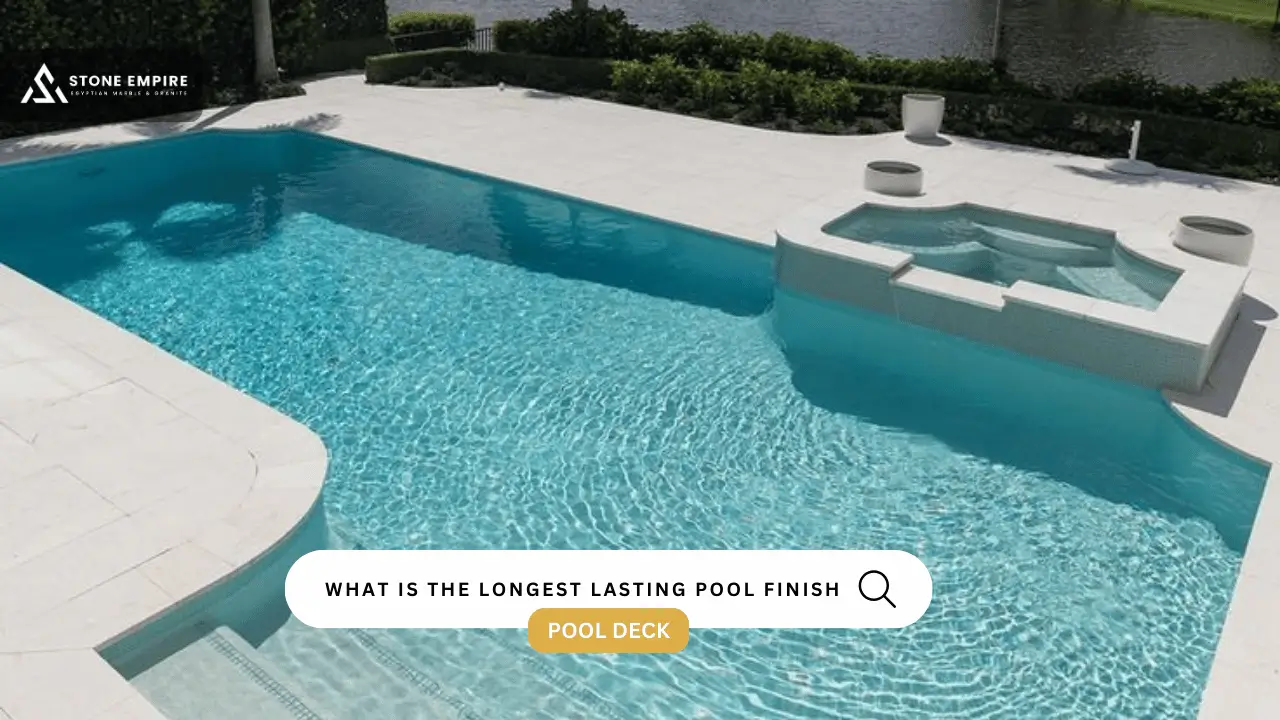
Choosing a pool finish isn’t just about appearance; it’s about durability, safety, and long-term performance. When people ask, What is the longest lasting pool finish, they may be referring to two different areas: the finish inside the pool or the stone finish around it. Each surface faces different conditions, from constant water exposure to sun, heat, and foot traffic. This guide explains lifespan differences and what truly affects pool finish durability.
What Is the Longest Lasting Pool Finish?
When people ask, “What is the longest lasting pool finish?” they might mean one of two things: the finish inside the pool or the stone finish around the pool (deck and surrounds):
1. The Finish Inside the Pool (the surface holding the water)
Pebble and porcelain tile are widely considered the longest-lasting interior pool finishes when properly installed and maintained.
On average:
- Plaster lasts 7-10 years
- Quartz finishes last 10-15 years
- Pebble finishes last 15-25+ years
- Porcelain tile lasts 20+ years
With proper installation, balanced water chemistry, and maintenance, high-quality pebble finishes can last over 25 years.
2. The Stone Finish Around the Pool (Deck, Coping, Surrounds)
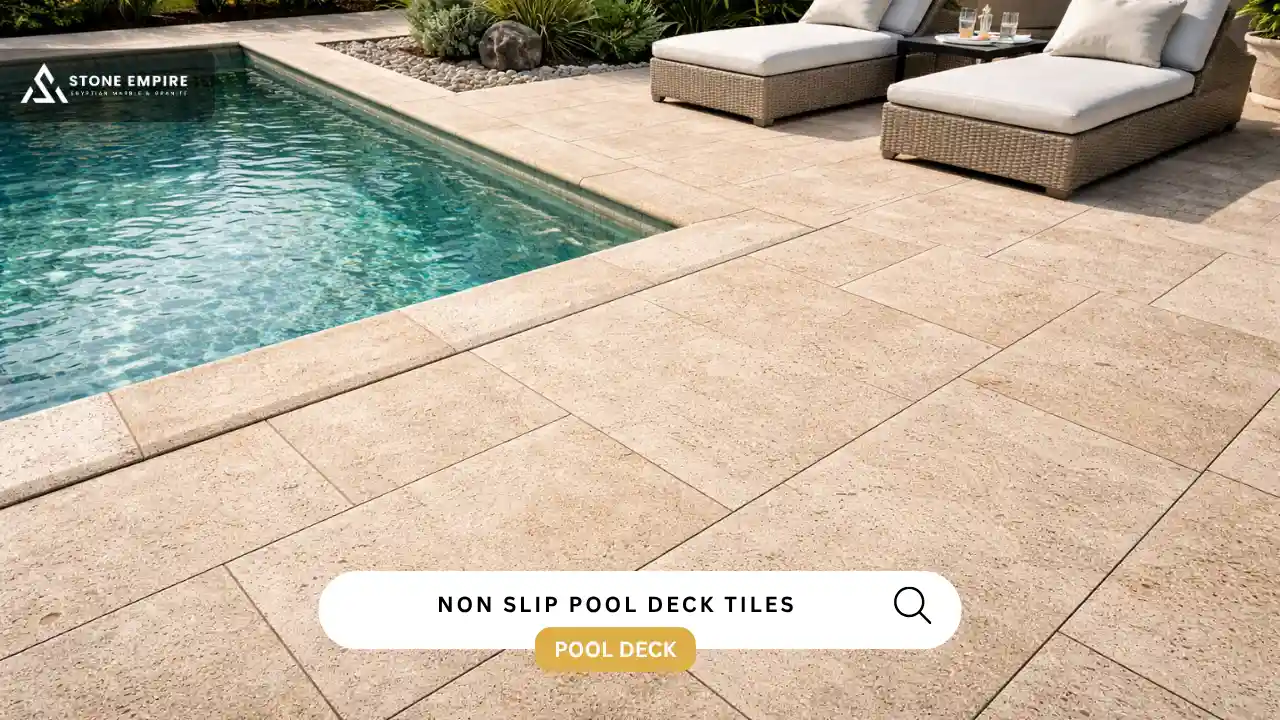
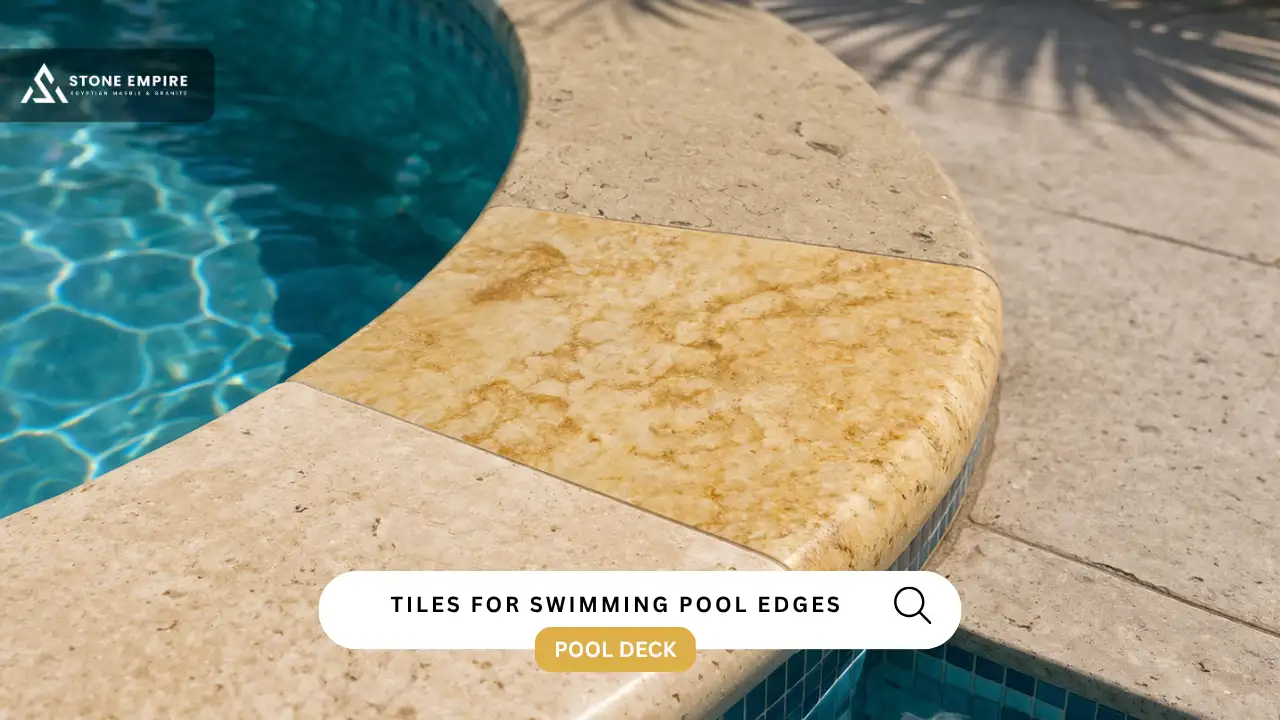
For pool decks and surrounds exposed to sun, wet conditions, and foot traffic, properly finished natural stone such as Egyptian marble can be a highly durable long-term solution when installed with correct drainage and sealing.
Remember:
The longest-lasting pool deck isn’t defined by marble or porcelain alone; it’s defined by choosing the right natural stone finishes, proper drainage, and correct sealing.

Popular Pool Finish Types and Their Lifespan
Here are the most popular finishes inside and outside the pool:
The Popular Pool Finish Inside the Pool
These are the finishes applied to the interior surface of the pool shell.
1. Standard Plaster (average lifespan: 7-10 years)
The most traditional and budget-friendly option. It provides a smooth, clean look but is more prone to staining and chemical wear over time.
2. Quartz Finish (average lifespan: 10-15 years)
A mix of plaster and crushed quartz aggregate. Stronger and more stain-resistant than plain plaster. Offers improved durability and a slightly textured surface.
3. Pebble Finish (average lifespan: 15-25+ years)
One of the most durable interior finishes available. Made of natural pebble aggregates embedded in cement, it resists chemicals, staining, and surface wear very well.
With proper maintenance, high-quality pebble finishes can exceed 25 years.
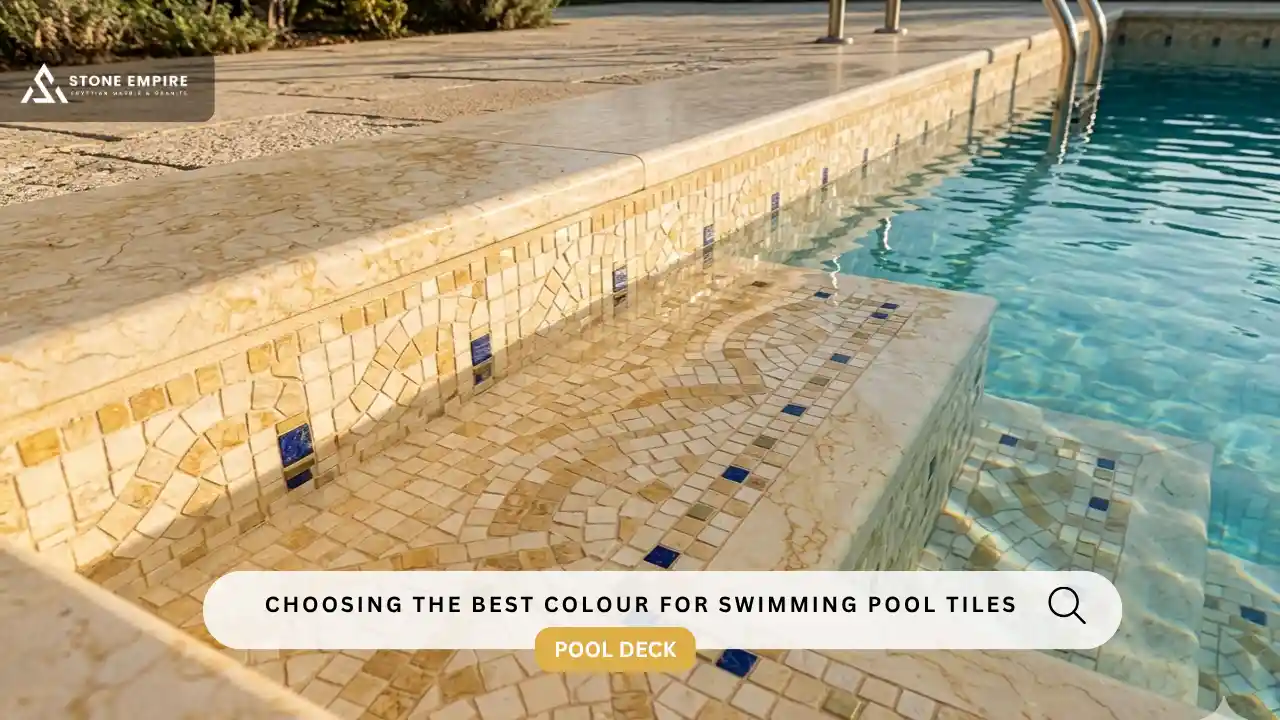
4. Porcelain or Glass Tile (Average lifespan: 20+ years)
Extremely durable and highly resistant to chemicals and fading. Often used in luxury pools. Installation quality and grout maintenance are critical for long-term performance.
The Popular Pool Finish Around the Pool (Deck & Surrounds)
These finishes must handle sun exposure, wet–dry cycles, foot traffic, and cleaning chemicals.
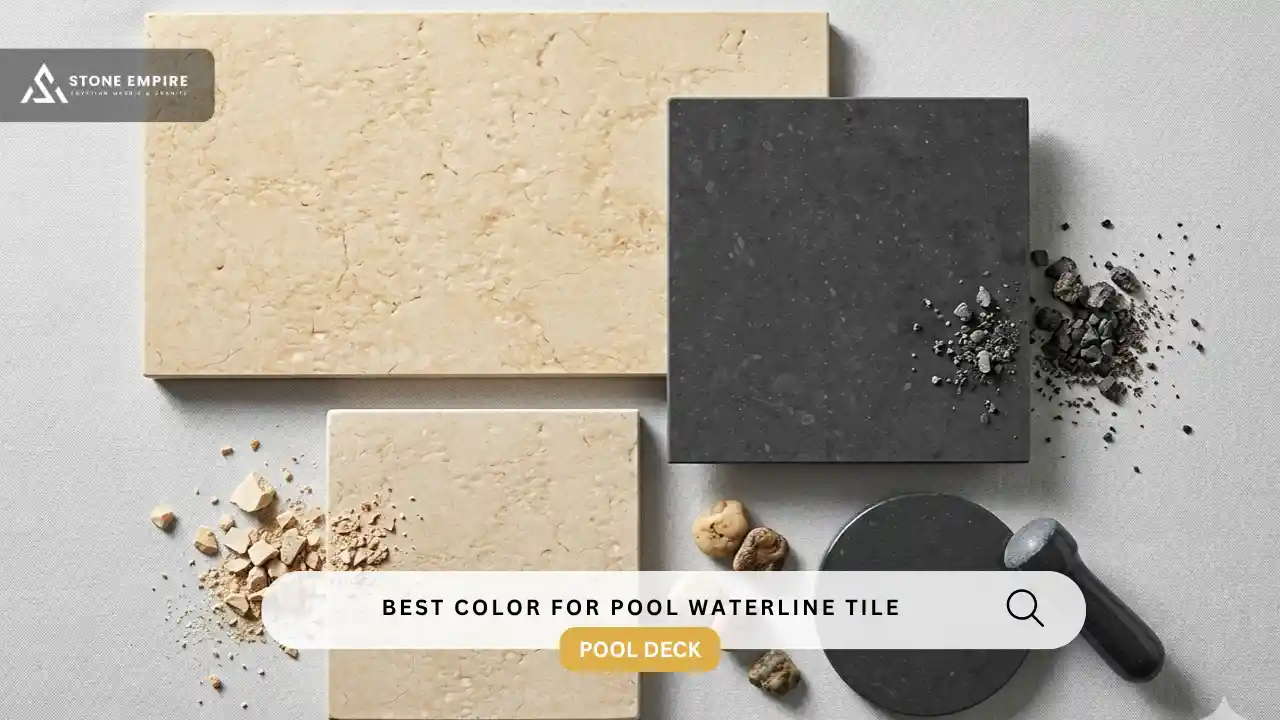
Natural Stone Finishes (Marble, Travertine, Granite)
Natural stone is one of the most durable long-term options when properly selected and installed. At Stone Empire Egypt, popular pool deck finishes include:
Lifespan Expectations:
With proper drainage, sealing, and installation, high-quality marble or granite pool decks can last 20+ years, often much longer in stable climates.
The true lifespan of any pool finish depends more on proper installation, drainage, and maintenance than on the material name alone.
Factors That Affect Pool Finish Durability
Even the best material can fail early if conditions aren’t right. Key durability factors include:

1. Water Chemistry
Unbalanced pH levels can cause:
- Etching
- Staining
- Surface roughness
- Premature wear
Maintaining proper chemical balance can extend finish life significantly.
2. Installation Quality
Poor surface preparation, incorrect mixing, or improper curing can shorten lifespan dramatically, regardless of material quality.
A well-installed plaster finish can outlast a poorly installed pebble finish.
3. Climate and Sun Exposure
High heat, freeze–thaw cycles, and intense UV exposure all affect surface performance over time.
Light-colored finishes typically perform better in hot climates.
4. Maintenance Routine
Regular brushing, gentle cleaning products, and proper sealing (for surrounding stone surfaces) all help extend durability.
5. Saltwater Systems
Salt pools are popular, but salt increases surface exposure to minerals and can accelerate wear if not managed properly.
Read Also: Best Pool Finish for Salt Water Pool
Choosing the Right Long-Lasting Pool Finish
At Stone Empire Egypt, one of the best marble and granite suppliers, we always explain one important truth:
The longest-lasting pool finish isn’t simply the most expensive option; it’s the one that fits your climate, pool system, and long-term expectations.
Before choosing, consider:
- Climate (heat, sun exposure, humidity, frost risk)
- Pool type (chlorine vs. saltwater system)
- Budget range
- Desired appearance (luxury, natural, modern)
- Maintenance tolerance (how much care you’re willing to commit to)
Want a recommendation for your project? Contact us
Conclusion
So, what is the longest lasting pool finish? The honest answer depends on more than material alone. Pebble and porcelain finishes lead in interior pool longevity, while properly finished natural stone can last decades around the pool. Correct installation, drainage, sealing, and maintenance play a bigger role than price or name. Choosing the right finish for your climate and pool system ensures long-term durability and lasting visual appeal.